<=home 

RS Optical Theremin

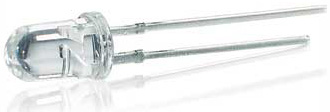
Photo-Transistor - 100% Radio Shack
(Photo courtesy of Cristian from Chile)

Here is audio Sample1 .mp3 (176k ) this is exposure to natural daylight in my well lit room. This Optical is not very musical or playable like a true theremin. The sound is un-natural.

Lights will add their own type of cool distortion, here is audio Sample2 .mp3 (113k). This is my fluorescent light magnifying glass getting near the sensor.

There is no Sound in Total Darkness!
The square wave pitch rises with the light level.

Video of the RS Optical Theremin Performance by
farnea
on Jan 7, 2008 in tech
Note: Q1 & Q2 could be replaced with a single CdS LDR light dependant resistor removed from a bathroom night light.
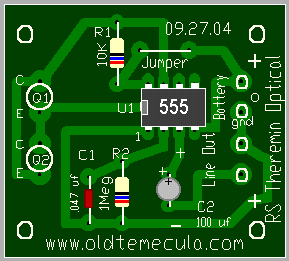
Etch your own PC Board Info
or use the generic board.


Board size 1.6" x 1.8" (40mm x 45mm)   


PDF (168k)  <= Etch your board using this file.
Due to the increase in project e-mail, time wise I am unable to give construction support to this circuit.

.
Note: On a generic pcb the two photo transistors must solder together in opposite directions from one another. Look for the fat internal lead C  (collector) 

The phototransistors physically mount in the same direction on the etched pc board. 

You need a black plastic sleeve around the phototransistors to block the light coming from the sides. This will make the light exposure more directional toward the phototransistors front lenses . Thanks Newbie3

When constructing make certain the electrolytic capacitor negative side is faced away from the IC.

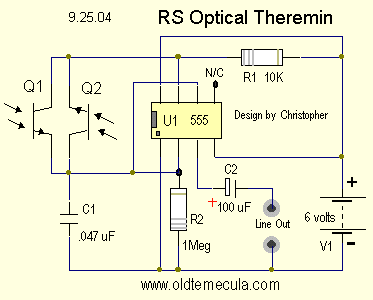
The power consumption of the circuit is extremely low. If you use this circuit to drive a mini amplified computer speaker input the optical circuits "AA" batteries would last years. Use the voltage divider below for a square wave through an amp. 

Line out can connect to a larger size speaker directly. If the TLC555 pin 3 output is fed into an amplifier input connect C2 10uf to a 10K resistor in series to a 1K resistor to ground, as a voltage divider. Take your signal from across the 1K resistor and ground. A CdS photo cell taken from a bathroom nightlight can be in series with this output line to the amplifier input used for a crude volume control.

Experiment: To modulate and drive a super bright LED then replace C2 with a 220 ohm 1/4 watt resistor and properly attach the +/- LED wires to the line out terminals. Pick up the sound remotely up to three feet away using a photo-transistor or a optical remote sensor. This also creates a volume control method.

A triangular waveform which creates a better tone (flute like) with odd harmonics is generated at pins 2 & 6 which is the top connection of C1 of the TLC555. This can be made useable by tapping off here and driving the high impedance input of an additional Op-Amp like a TL082 or high impedance amplifier input. This is needed for isolation of the triangular wave to avoid loading down the performance of the TLC555 circuit. A computer amplified speaker won't work properly here. Using the voltage divider a guitar amp here will give "some kind" of result.

  Value Quan. Part# Price Packs Total Special Notes
Q1, Q2 Phototransistor 2 276-145 1.59 2 3.18  
U1  TLC555 1 276-1718 1.69 1 1.69  
C1  .047 uf 1 272-1068 1.29 1 1.29 Pack has two
C2  100 uf 1 272-1044 1.29 1 1.29  
R1  10 K 1 271-1335 
or  271-1126 
.99 1 .99 brown-black-orange-gold
R2  1 Meg 1 271-1356 
or  271-1134
.99 1 .99 brown-black-green-gold

Misc.
IC Sockets 8 Pin 1 276-1995 0.69 1 0.69 Use a Socket !
PC Board Generic 1 276-159 2.29 1 2.29 Pack has two or use PDF (168k) 
V1 Battery 4 AA Holder 1 270-409 1.89 1 1.89 Switch in Battery Holder
Line Out PC Board Term. 1 276-1388 2.29 1 xx Optional Pack of 4 
Enclosure 4x2x1 1 270-1802 2.69 1 xx Optional Box
 Prices as of Sept. 25, 2004    US Dollars  Total = 14.30 <=Batteries Not Included (-;